Psoriasis
Understanding Psoriasis
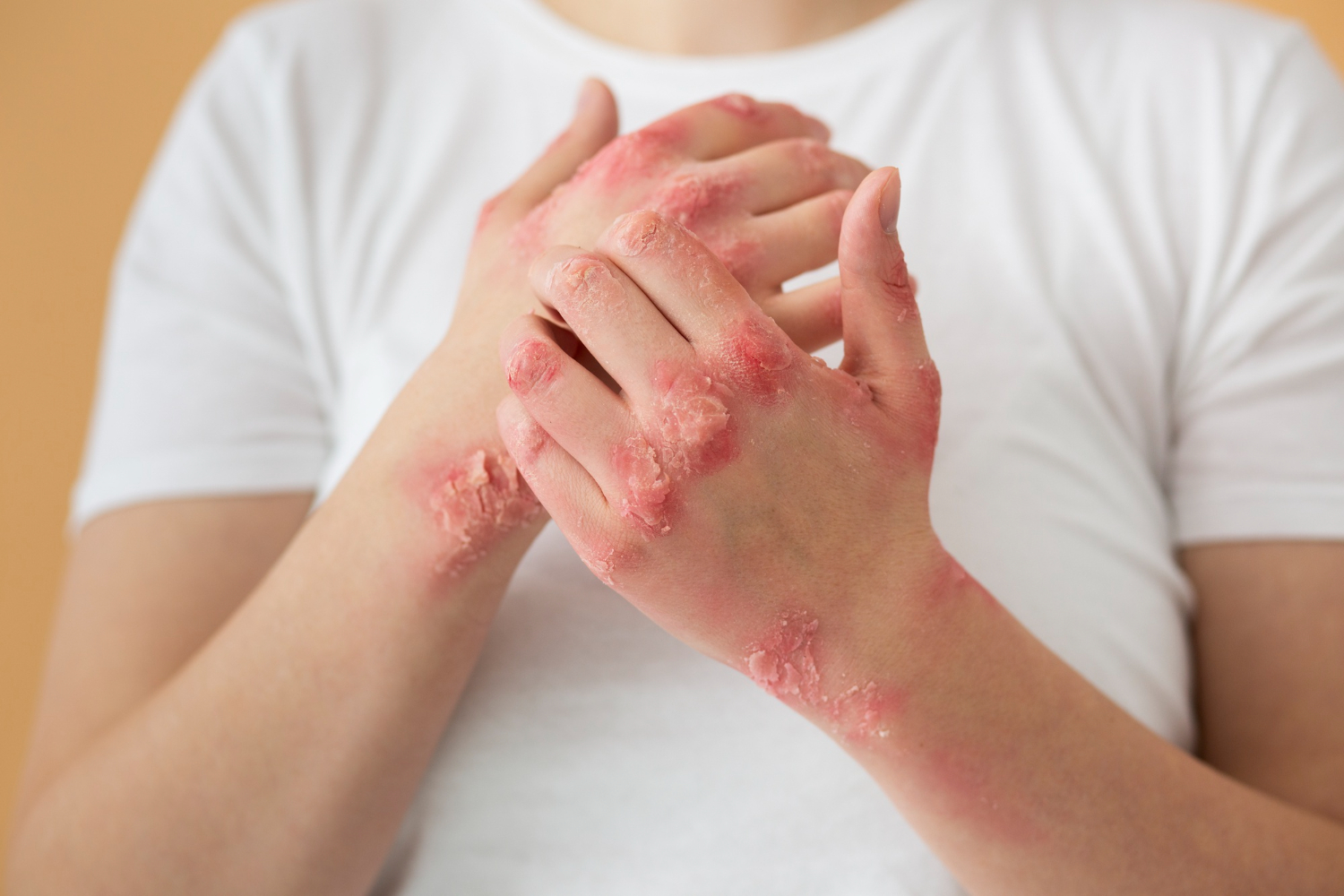
Psoriasis is a chronic inflammatory skin condition associated with immune system activity. It causes skin cells to build up more quickly than usual, resulting in visible patches that may be red, thickened, dry or covered with silvery scales.
Psoriasis can affect different areas of the body, including the scalp, elbows, knees, hands, feet and lower back. Its severity varies. Some people experience small patches, while others have more widespread symptoms. The condition is not contagious and cannot be passed from one person to another through contact.
At Radical Homeopathy, consultations for psoriasis focus on understanding the patient’s symptoms, skin history, possible triggers and previous treatments, alongside appropriate dermatological care.
Common Signs and Symptoms
Psoriasis may present with:
Red or inflamed skin patches
Thickened areas covered with silvery-white scales
Dry or cracked skin
Itching, burning or soreness
Scalp flaking and thick plaques
Nail pitting or changes in nail appearance
Recurrent skin flare-ups
Joint pain or stiffness in some patients
Types of Psoriasis
Different forms of psoriasis may affect the body in different ways:
Plaque psoriasis: Raised, scaly patches that commonly appear on elbows, knees and the scalp.
Scalp psoriasis: Scaling, itching and thick plaques on the scalp.
Guttate psoriasis: Small, drop-shaped spots that may develop after certain infections.
Some people with psoriasis may also develop psoriatic arthritis, which affects the joints.
Understanding Triggers
Psoriasis flare-ups may be associated with infections, stress, skin injuries, smoking, alcohol and certain medications. Triggers vary between individuals, and identifying personal patterns can help with ongoing management.
Our Consultation Approach
A consultation may include:
Reviewing the appearance and location of skin patches
Understanding when symptoms started
Discussing itching, pain and flare-up patterns
Reviewing nail and joint symptoms
Assessing previous medications and skin treatments
Reviewing relevant medical reports
A dermatologist may recommend examination or additional investigations when necessary.
Management and Skin Care
Evidence-based treatment depends on the type and severity of psoriasis. Options may include moisturisers, prescribed topical treatments, phototherapy and systemic medications. Regular moisturising, gentle skin care and avoiding known triggers may also help manage discomfort.
Homeopathy has not been proven to treat psoriasis or prevent its flare-ups. It should not replace prescribed dermatological treatment.
When to Seek Medical Attention: if symptoms are severe, sudden, worsening, or not improving, consult a qualified homeopathic physician at Radical Homeopathy. For emergencies, or serious conditions, seek immediate medical care.”